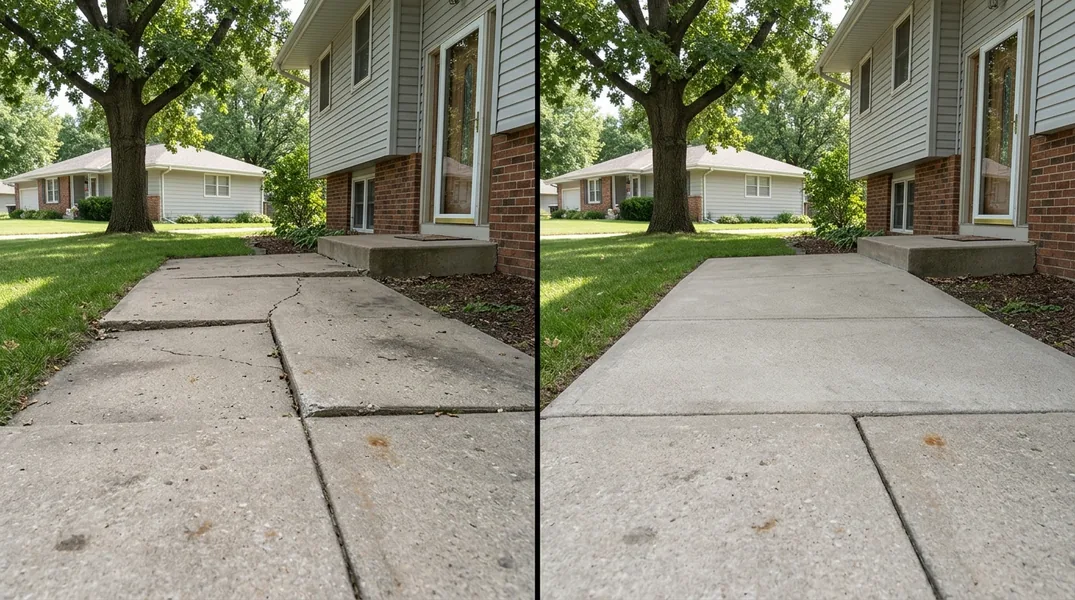
Understanding Cedar Rapids' Challenging Soil and Climate
Cedar Rapids sits in a region with geological and climatic conditions that are genuinely tough on concrete. The area experiences deep winter frost, with ground temperatures dropping well below freezing for extended periods. This freeze-thaw cycle is one of the primary culprits behind concrete damage that homeowners face year after year.
The soil composition adds another layer of complexity. Cedar Rapids sits atop a unique combination of loess (wind-deposited silt from the last ice age) and river silt from the Cedar River valley. These fine-grained soils have poor drainage characteristics and expand and contract dramatically with moisture and temperature changes. When water infiltrates concrete and then freezes, it exerts tremendous pressure from below, pushing upward and creating the cracking and heaving that so many local homeowners have witnessed in their driveways and patios.
The Freeze-Thaw Cycle: Why Iowa Winters Destroy Concrete
Freeze-thaw damage is the leading cause of premature concrete failure in Iowa, and Cedar Rapids is no exception. Here's how the process works: water seeps into tiny cracks and pores in concrete. When temperatures drop below 32 degrees Fahrenheit, that water freezes and expands by roughly 9 percent. This expansion creates internal pressure that pushes outward on the concrete, widening existing cracks and creating new ones. When spring arrives and temperatures rise, the ice melts, leaving gaps and weakened areas. Over multiple freeze-thaw cycles in a single winter, this repeated stress compounds, leading to spalling (surface flaking), large cracks, and eventually structural failure.
The problem is particularly severe in Cedar Rapids because winters are long and the temperature fluctuates frequently. A warm January thaw followed by a hard freeze in February creates the worst-case scenario. Road salt, which is heavily used on driveways and parking areas throughout the region, accelerates this damage by lowering the freezing point of water and allowing more freeze-thaw cycles to occur even at temperatures that might otherwise prevent it.
Frost Heave and Soil Movement: Why Your Driveway Rises and Cracks
Frost heave is a phenomenon that many Cedar Rapids homeowners experience but don't fully understand. When the ground freezes, water in the soil migrates upward toward the freezing front, creating ice lenses that expand and push the soil (and anything on top of it) upward. This isn't a uniform process, which is why you often see driveways that heave unevenly, with one section rising higher than another. The uneven movement creates stress points where concrete cracks.
The loess and silt soils common in the Cedar Rapids area are particularly susceptible to frost heave because they retain moisture readily and have fine pores that allow water to migrate upward. A driveway installed over poorly compacted soil or without adequate base preparation will experience more dramatic heaving. Once heaving occurs, even if the ground eventually settles back down in spring, the concrete has been damaged. The settled areas create low spots that collect water, which infiltrates cracks and accelerates the freeze-thaw damage cycle all over again. This is why proper site preparation and drainage are absolutely critical when installing new Concrete Driveways in the region.
How Loess and River Silt Accelerate Concrete Deterioration
Loess is a fine, silty soil deposited by wind during the last ice age, and it blankets much of Iowa, including the Cedar Rapids area. River silt from the Cedar River valley adds another layer of fine-grained material. Both materials have low permeability, meaning water doesn't drain through them quickly. When concrete is poured over these soils without proper preparation, water becomes trapped beneath the surface. This trapped moisture is the enemy of concrete longevity.
Additionally, these soil types are prone to settling and compaction over time, particularly when subjected to freeze-thaw cycles. As the soil beneath a driveway settles unevenly, it creates voids and stress points in the concrete above. The concrete, which is rigid and brittle, cannot flex to accommodate this movement, so it cracks. Once cracks form, water penetrates deeper, reaching the soil and reinforcing steel (if present), leading to rust and further deterioration. This is why Concrete Repair & Resurfacing services are so commonly needed in the region.
Prevention and Protection: Building Concrete That Lasts in Cedar Rapids
The good news is that concrete can be built to withstand Cedar Rapids' challenging conditions, but it requires proper design and installation. The foundation is everything. A well-built driveway starts with proper site grading and drainage. Water must be directed away from the concrete, not allowed to pool or infiltrate. A properly compacted base (typically 4 to 6 inches of crushed stone or gravel) provides a stable, draining layer that prevents frost heave and reduces the risk of settling.
The concrete mix itself matters tremendously. Air-entrained concrete, which contains tiny air bubbles throughout the material, performs significantly better in freeze-thaw environments. These air bubbles provide space for water to expand into when it freezes, reducing the damaging pressure that would otherwise crack the concrete. Proper thickness (typically 4 inches for residential driveways) and reinforcement with wire mesh or rebar also improve durability. Sealing the concrete surface with a quality sealant every two to three years creates a barrier that prevents water infiltration, extending the life of the driveway substantially.
If you're planning a new driveway or Concrete Patios in Cedar Rapids, working with a local contractor who understands the region's soil and climate challenges is essential. Cedar Rapids Concrete brings decades of local experience to every project, ensuring that your concrete is built to last despite the demanding conditions. Call (319) 774-7901 or visit our website to discuss your project and get a free estimate.
Concrete Repair in Cedar Rapids: Addressing Existing Damage
If your driveway is already showing signs of cracking, heaving, or spalling, don't wait for the damage to worsen. Small cracks can be sealed or filled to prevent water infiltration. Larger cracks, significant heaving, or extensive surface damage typically require professional Concrete Repair & Resurfacing. Depending on the extent of the damage, solutions range from targeted repairs and patching to complete resurfacing or replacement.
The key is addressing the underlying cause. If frost heave or soil settling is the culprit, simply filling cracks won't solve the problem long term. A qualified contractor will evaluate the site conditions, drainage, and soil stability before recommending a repair strategy. Some situations call for improving drainage or stabilizing the base before repairing the concrete surface. Cedar Rapids Concrete has the expertise to diagnose the root cause of your concrete problems and recommend the most cost-effective, durable solution. Reach out today at (319) 774-7901 or contact us online for a detailed assessment.
Looking for a professional concrete contractor in Cedar Rapids? Cedar Rapids Concrete responds fast for all your concrete needs.
Get a Free QuoteOur services: Concrete Driveways · Concrete Patios · Stamped & Decorative Concrete