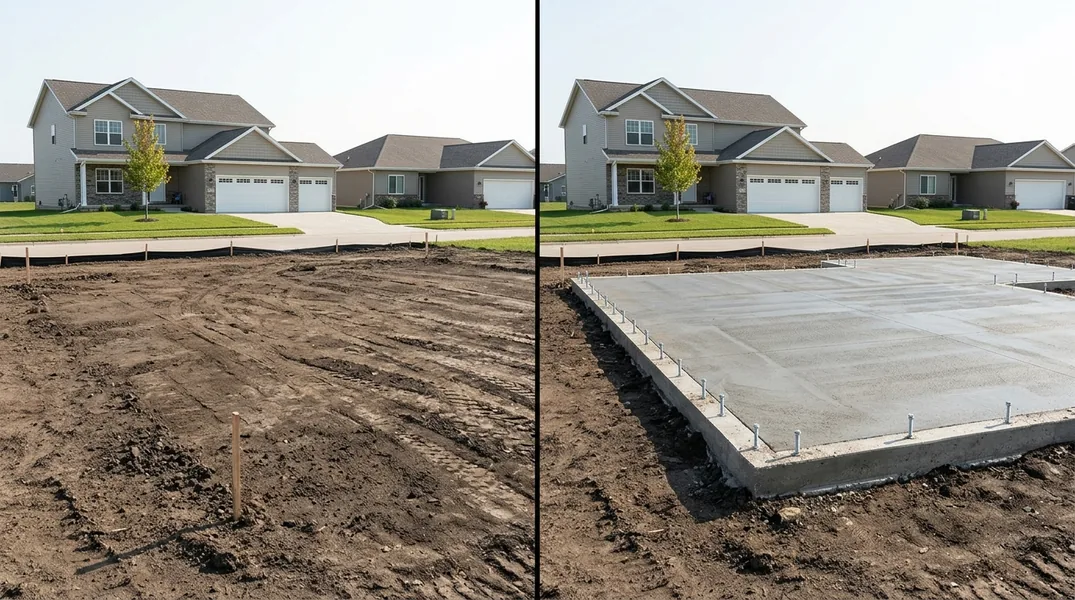
Why New Construction Slab Inspection Matters
Buying a new home is one of the largest investments you'll make, and the foundation literally supports everything else. When you're closing on a new build in Cedar Rapids, the concrete slab beneath your home and garage deserves careful attention. Many homebuyers focus on cosmetic finishes, paint colors, and appliances, but they overlook the concrete work that will determine whether their home remains structurally sound for decades to come.
A properly constructed concrete slab should be level, free of major cracks, and installed over a well-prepared base. Poor slab construction can lead to foundation settling, cracked walls, uneven floors, and costly repairs down the road. Builders sometimes cut corners on concrete work because it's hidden from view, but you have every right to inspect it before your closing date. Understanding what to look for protects your investment and gives you leverage to negotiate repairs or credits if problems are discovered.
Key Signs of Quality in New Home Garage Slabs
The garage slab is often the first concrete surface homebuyers see, and it's an excellent indicator of overall construction quality. A new home garage slab should be smooth, with minimal surface blemishes and no large cracks running across it. Minor hairline cracks are normal in concrete as it cures, but anything wider than one-eighth inch or cracks that run the length of the slab suggest poor installation or inadequate base preparation. Walk the entire garage floor and look for areas that are noticeably higher or lower than others. Use a long straightedge or even a marble if you have one available; roll it across the floor and watch for gaps that indicate an uneven surface.
Pay attention to the edges and corners of your new home garage slab as well. The concrete should meet the foundation walls cleanly without large gaps or separation. If you notice the slab pulling away from the walls or settling unevenly, this could indicate foundation problems that will only worsen over time. Check for water staining or evidence of moisture, which suggests drainage issues under the slab. A quality new construction slab also shows proper finishing, with a consistent texture and no exposed aggregate (small stones) poking through the surface. If you're unsure about what you're seeing, don't hesitate to call in a professional inspector or contact Cedar Rapids Concrete for a free estimate to assess the work before you close.
Foundation Slab Inspection: What Builders Should Have Done Right
Before any concrete is poured for your new home, the builder should have prepared the base properly. This means removing topsoil and organic material, compacting the soil to the correct density, and installing a gravel or stone base layer. If these steps are skipped or rushed, the concrete slab will settle unevenly and crack prematurely. When you inspect the foundation slab, you're looking for evidence that this preparation was done correctly. If the slab is already showing signs of settlement or cracking just months after construction, the base work was likely inadequate.
Look for cracks that follow a pattern rather than appearing random. Diagonal cracks or those concentrated in one area often indicate differential settlement, meaning the slab is sinking at different rates. This is a serious issue that requires professional evaluation. Also inspect the perimeter of the slab where it meets the foundation wall. There should be a consistent joint, and you shouldn't see gaps that suggest movement or settling. In Cedar Rapids, where freeze-thaw cycles are common, proper base preparation and slab thickness are especially critical. Ask your builder for documentation of the base preparation, slab thickness, and concrete specifications before you close. If the slab shows problems and the builder claims it's normal, request a third-party inspection to get an objective assessment.
Common Concrete Defects in New Construction Slabs
Even new slabs can have defects, and knowing what to look for helps you catch problems before they become expensive repairs. Surface scaling is one common issue, where the top layer of concrete flakes or peels away. This often results from using too much water in the concrete mix or finishing the slab too early before it's fully cured. Spalling, which involves larger chunks breaking away, is more serious and usually indicates poor concrete quality or improper air entrainment (tiny air bubbles that help concrete withstand freeze-thaw cycles). In the Cedar Rapids climate, air entrainment is essential, so make sure your builder used air-entrained concrete.
Efflorescence is another issue you might see, appearing as a white, chalky residue on the concrete surface. This happens when water moves through the concrete and deposits salts on the surface. While it's usually cosmetic, it can indicate moisture problems that need attention. Curling is when the edges of the slab curl up or down, typically caused by uneven drying or improper reinforcement. Look at your slab from different angles and times of day to spot these issues. Concrete Repair and Resurfacing can fix many of these problems, but it's far better to catch them before closing and have the builder address them. If you're not confident in your inspection, a professional can provide a detailed assessment and recommendations.
Questions to Ask Your Builder About Concrete Work
Before your final walkthrough, prepare a list of specific questions about the concrete slab. Ask what concrete mix design was used, including the water-to-cement ratio and whether the concrete is air-entrained. Request the slab thickness and base preparation details. Ask about the curing time and conditions, which affect how well the concrete hardens. Find out if the slab was sealed or finished with any protective coating, and if so, what product was used and how to maintain it. These details matter because they directly impact durability and performance.
Also ask about the builder's warranty on concrete work. Most builders offer limited warranties, typically one year, but the terms vary widely. Understand exactly what is covered and what your recourse is if problems develop. Ask for written documentation of all concrete specifications and installation details. If the builder is vague or dismissive about these questions, that's a red flag. A reputable builder will have detailed records and be happy to discuss their concrete work. If you notice any issues during your inspection, ask the builder in writing to address them before closing. Having documentation creates a paper trail and protects your interests. If major problems are found and the builder won't address them, you have grounds to negotiate credits or walk away from the deal.
Next Steps: Professional Inspection and Moving Forward
If you're uncomfortable assessing the concrete slab yourself, or if you notice potential problems, hiring a professional inspector is money well spent. A structural engineer or concrete specialist can identify issues that untrained eyes might miss and provide expert documentation of any defects. This report gives you leverage in negotiations with the builder and protects you legally if problems emerge later. In Cedar Rapids, where concrete experiences significant seasonal stress, professional inspection is especially valuable for new construction homes.
Once you close on your new home, maintain the concrete slab properly to extend its life. Keep it clean and dry, avoid harsh de-icing salts in winter, and address any cracks or damage promptly. If you have questions about maintaining your slab or notice issues after closing, Cedar Rapids Concrete can help. Whether you need advice on Concrete Driveways, patios, or other concrete surfaces, our team is here to support Cedar Rapids homeowners. Call us at (319) 774-7901 or visit our website to learn more about our services and how we can help protect your investment in your new home.
Looking for a professional concrete contractor in Cedar Rapids? Cedar Rapids Concrete responds fast for all your concrete needs.
Get a Free QuoteOur services: Concrete Driveways · Concrete Patios · Stamped & Decorative Concrete